

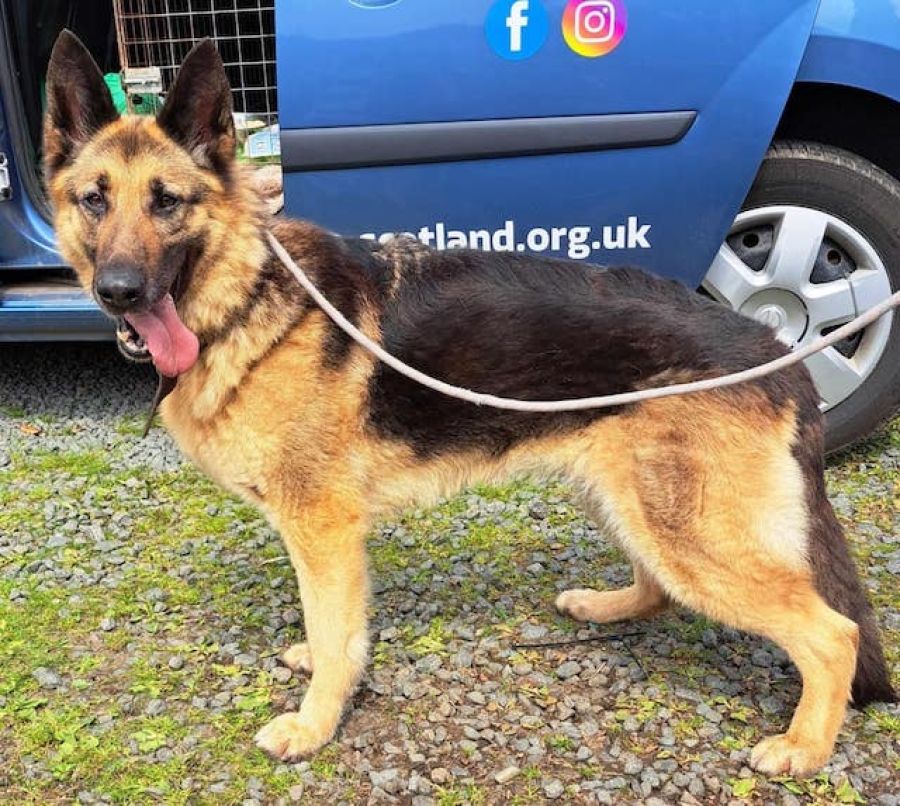
8 Year old Tara is a lovely dog who is in our kennels. Our volunteer visited Tara while she was on a foster placement for a few weeks, she is now back in our kennels.
When our volunteer called at the home of the fosterers Tara barked loudly and jumped up in front of our volunteer.
Tara followed our volunteer into the living room area, barking but still not coming close to her visitor. After a couple of minutes Tara quietened down and our volunteer then sat on couch.
When our volunteer sat down, Tara approached him and gently took some offered treats. Tara was happy to these and be petted. As Tara became more confident around our volunteer, she was a little mouthy.
Our volunteer engaged Tara in some find the treat games which she quickly began to enjoy.
Due to a medical condition with her throat, Tara cannot be taken on long walks. However, Tara does seem to want to be an active dog and to play. This could explain the mouthing (frustration) behaviour she displayed.
Engaging Tara in less strenuous activities such as search games around her home, brain games and training exercises to keep her mentally stimulated will give her purpose and reduce boredom and frustration whilst tiring her out at the same time.
When the male fosterer got Tara's walk harness and lead to go out Tara became noisy and excited, but when the fosterer sat back down Tara quickly settled down and began playing with a soft toy.
Tara is walked on lead attached to a harness as her medical condition means she must not have pressure applied to her throat by a lead and collar.
On going out for a walk Tara pulled a bit on lead with the fosterer and when a car passed nearby she circled on herself.
Our volunteer walked Tara and her pulling eased off. When a few other cars passed our volunteer kept Tara close on a short lead length and she did not circle. Our volunteer tried standing Tara some yards from a busier road and found that fairly quickly he could get her to turn away from the passing traffic to take food treats. With careful and consistent desensitisation training, Tara would become easy to manage around passing traffic.
While our volunteer was walking Tara she saw three or four other dogs but did not bother about them. Two of the dogs were smaller dogs who were fairly close on the opposite pavement and were barking loudly at Tara, but she did not bark back or acknowledge them.
Our volunteer thinks that Tara has the potential to make a good companion dog, but will need to be placed with someone who will keep her regularly mentally stimulated, and who will manage her in a firm but fair manner and set clear and consistent boundaries.